
 Image 1 of 5
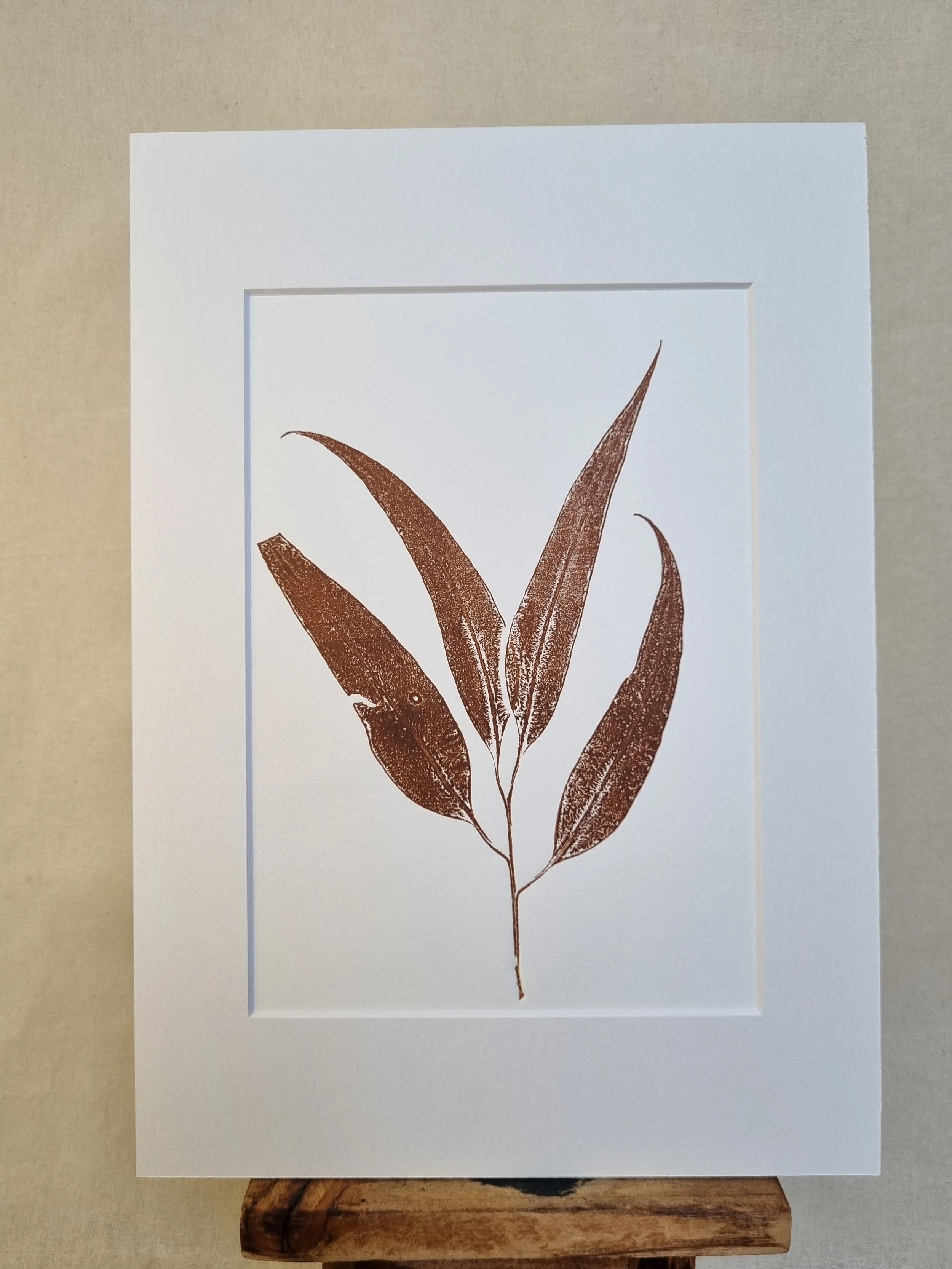 Image 2 of 5
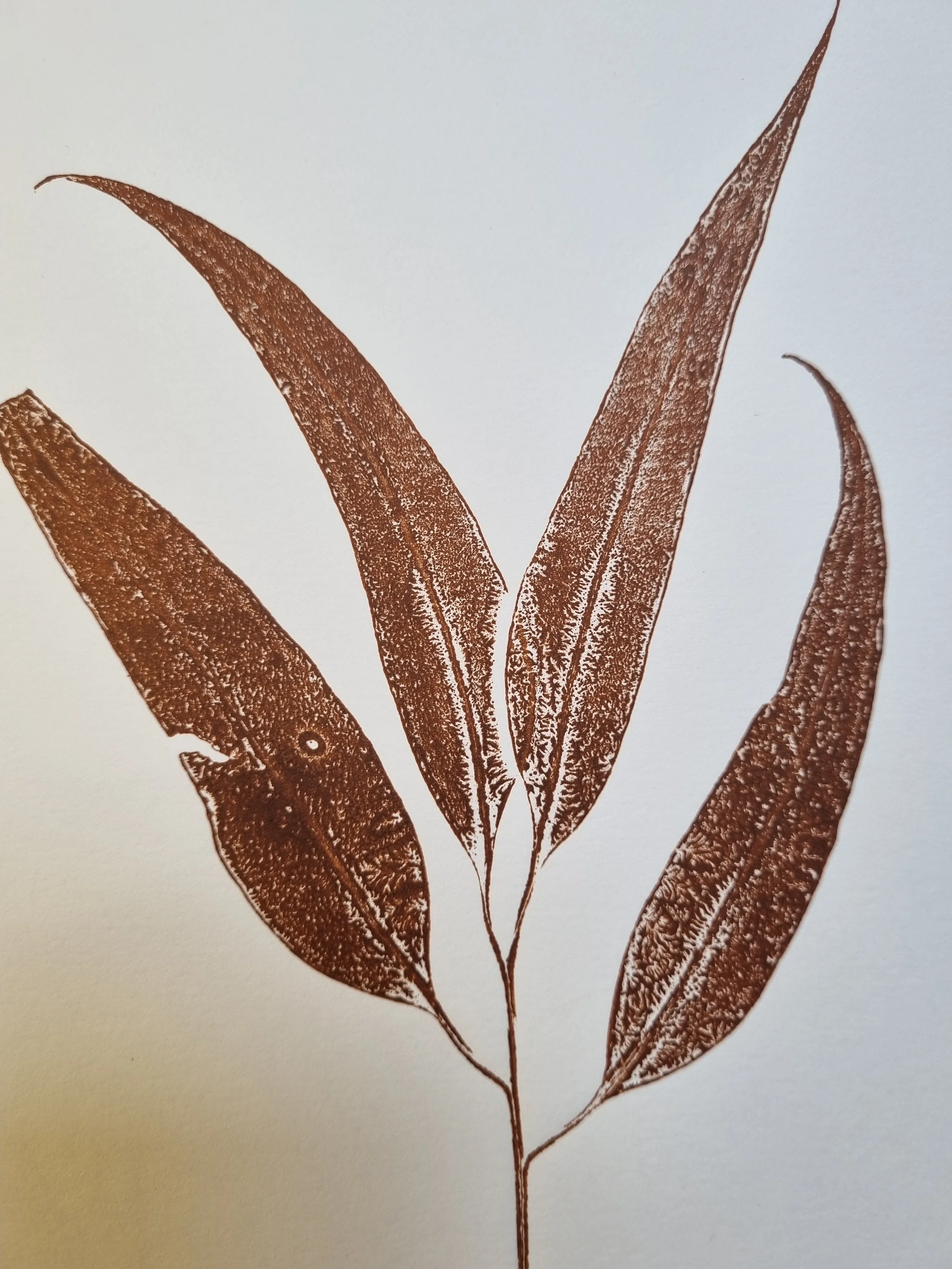 Image 3 of 5
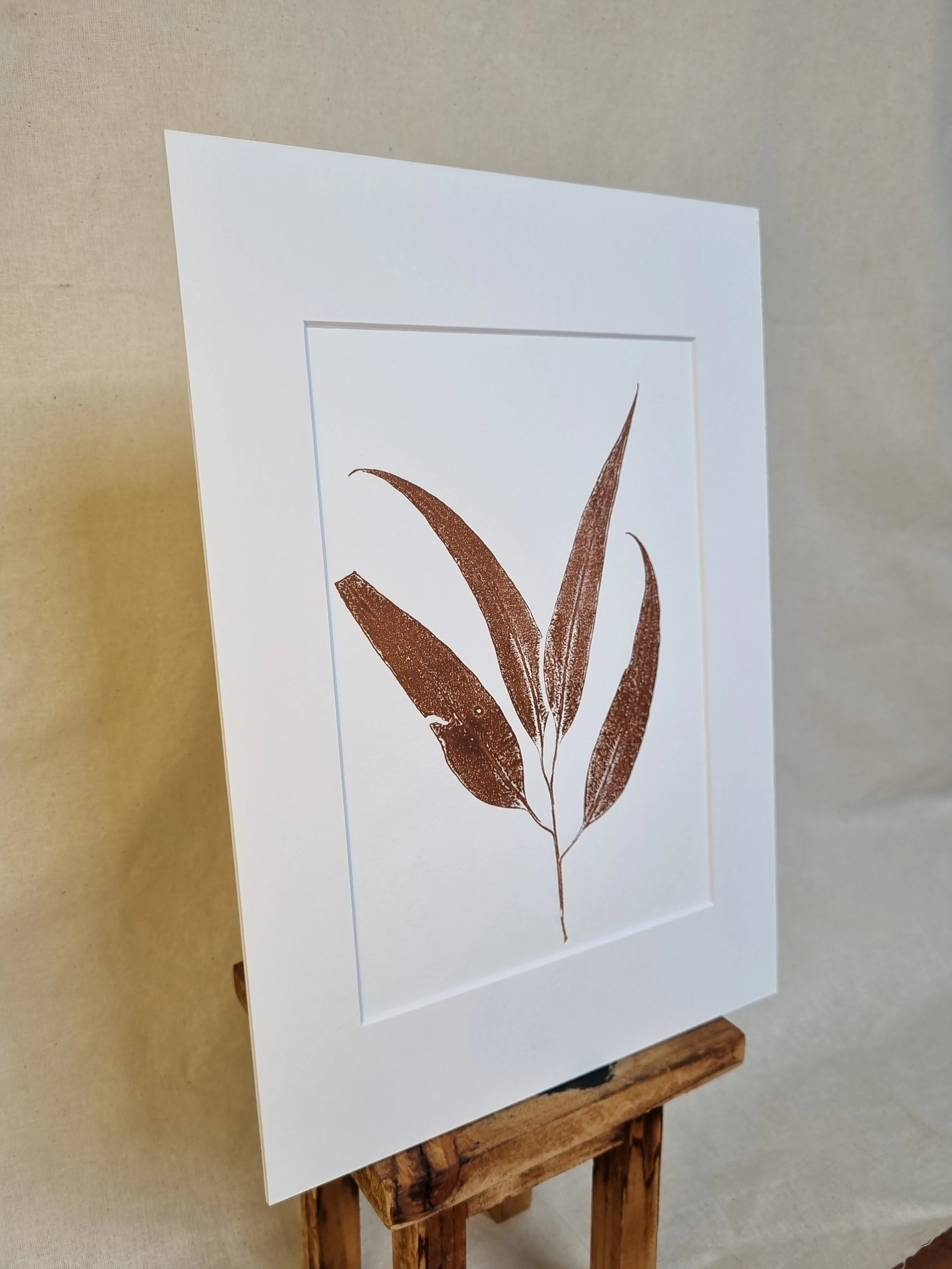 Image 4 of 5
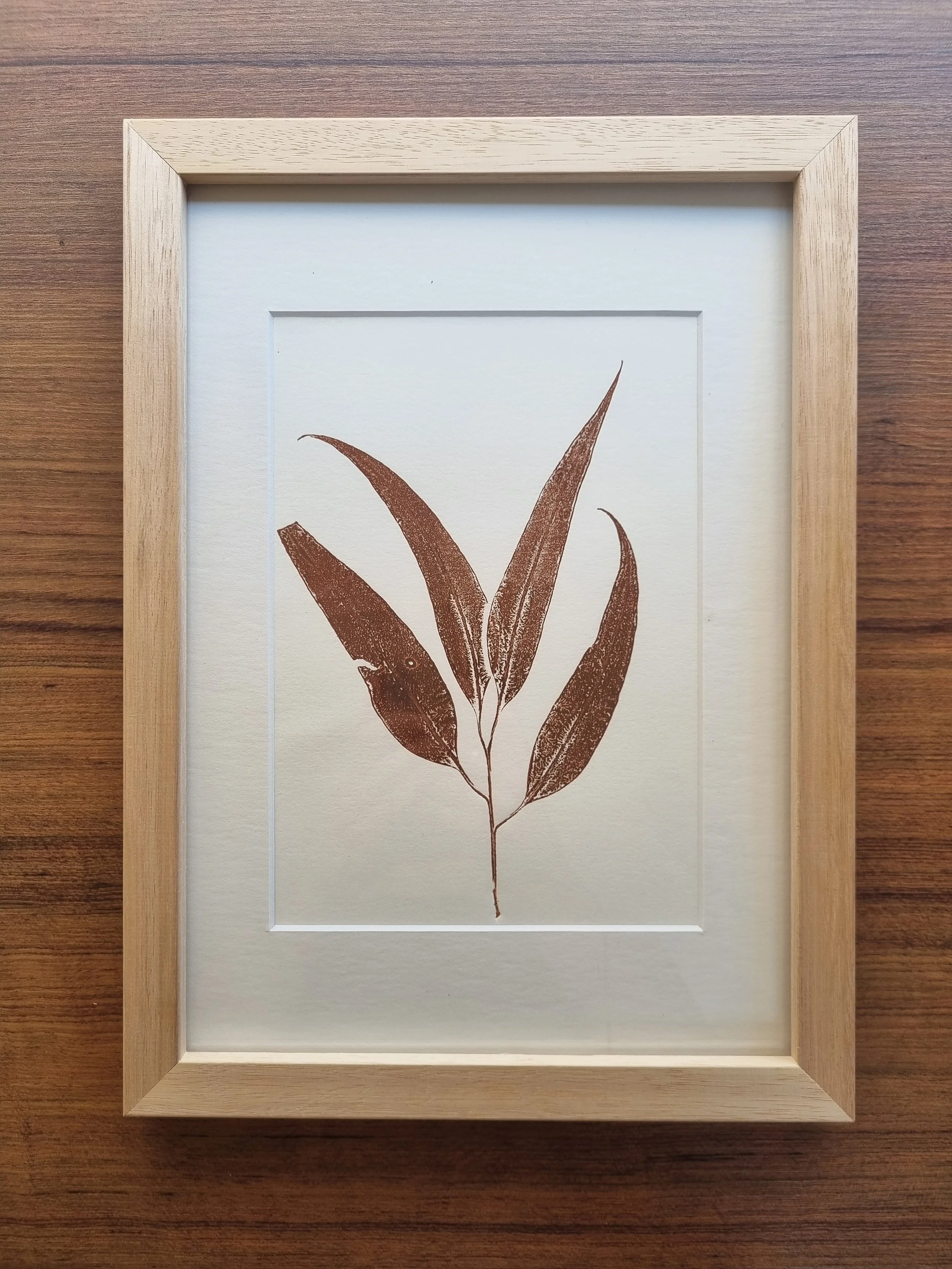 Image 5 of 5
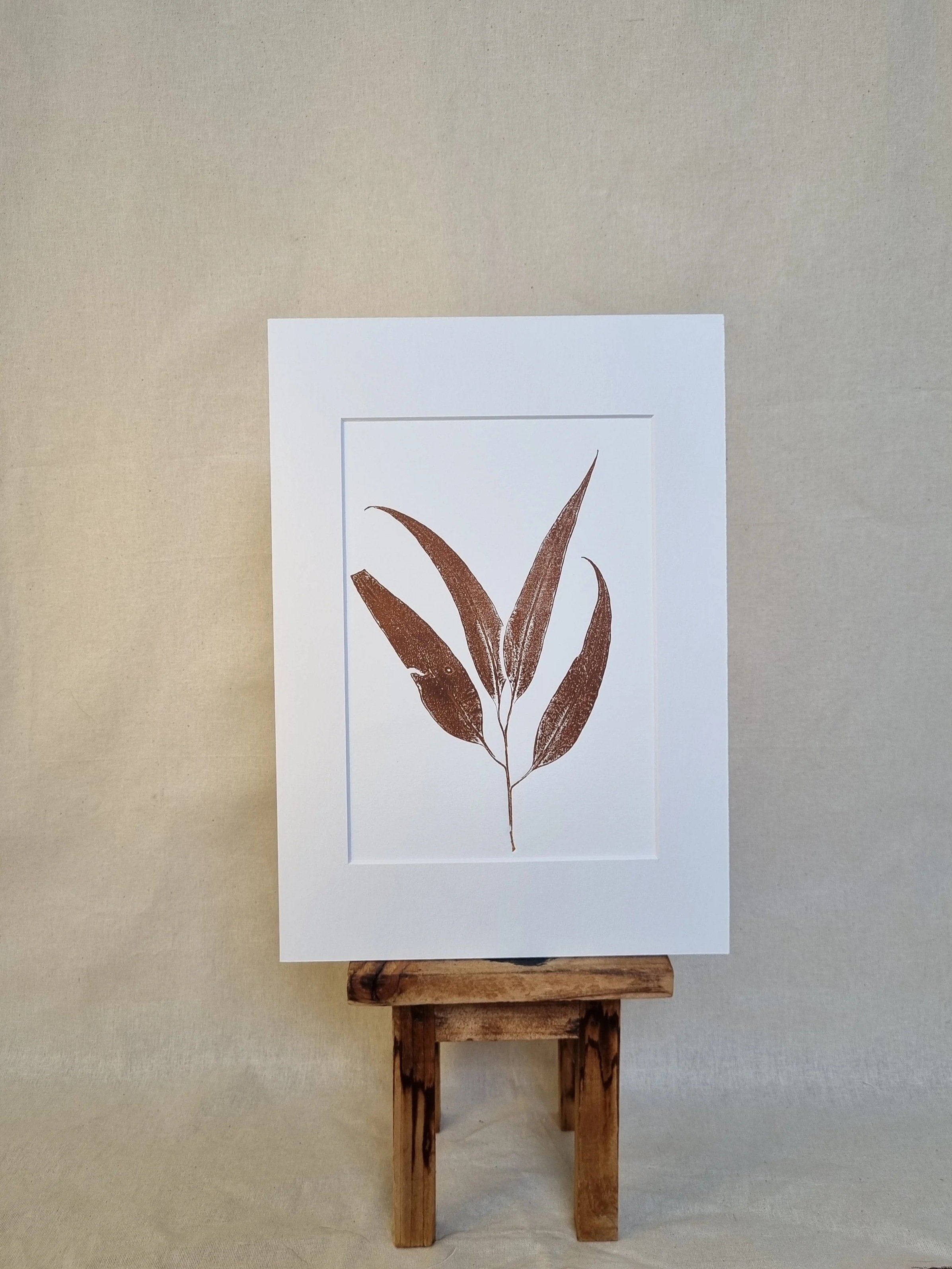
This original botanical monoprint features Grey Gum (Eucalyptus propinqua) — a native eucalypt found along the coastal and subcoastal regions of Queensland and New South Wales. Grey Gum plays an important role in native ecosystems, providing habitat and food for a range of insects and wildlife, and is valued for its resilience and adaptability within its natural range.
As with all original monoprints, this is a one-of-a-kind piece — the result of a single printing process that cannot be replicated.
Details
Grey Gum (Eucalyptus propinqua)
A4 (210 × 297 mm) mount with A5 (148 × 210 mm) aperture
Linseed oil–based printmaking ink — Burnt Umber
Fabriano Unica paper
Your print will come mounted and in a protective sleeve, carefully packaged to ensure safe arrival to its new home.
Option for custom framing - just send me an email and I can arrange for framing!
Botanical monoprinting is a slow, hands-on process that uses real plants to create one-of-a-kind prints. Each piece reflects the natural variation of the plant and the printing process itself.
Mounted and ready to be framed, this work is intended to be placed where the fine detail and quiet beauty of Australian native plants can be appreciated and celebrated.
This original botanical monoprint features Grey Gum (Eucalyptus propinqua) — a native eucalypt found along the coastal and subcoastal regions of Queensland and New South Wales. Grey Gum plays an important role in native ecosystems, providing habitat and food for a range of insects and wildlife, and is valued for its resilience and adaptability within its natural range.
As with all original monoprints, this is a one-of-a-kind piece — the result of a single printing process that cannot be replicated.
Details
Grey Gum (Eucalyptus propinqua)
A4 (210 × 297 mm) mount with A5 (148 × 210 mm) aperture
Linseed oil–based printmaking ink — Burnt Umber
Fabriano Unica paper
Your print will come mounted and in a protective sleeve, carefully packaged to ensure safe arrival to its new home.
Option for custom framing - just send me an email and I can arrange for framing!
Botanical monoprinting is a slow, hands-on process that uses real plants to create one-of-a-kind prints. Each piece reflects the natural variation of the plant and the printing process itself.
Mounted and ready to be framed, this work is intended to be placed where the fine detail and quiet beauty of Australian native plants can be appreciated and celebrated.